

Learn
Moana Under Pressure: Deep Sea Mining in Aotearoa
18th March 2026
Compelling evidence of wide spread long term eco system damage from Deep Sea Mining amidst bid for activity in Aotearoa.
2 minute read
Article authored by Mindful Money Research Analyst Sophie Auckram.
What is Deep Sea Mining?
Deep sea mining is a damaging industry with widespread impacts on the health of million-year old species and ecosystems in our oceans globally. Sediment plumes from deep sea mining operations can spread beyond the seafloor to impact mid-water marine life, affecting the whole aquatic food chain (Fotheringham, 2025). Deep sea species have slow recovery rates, for example, deep sea coral grows back at only a few millimeters each year.
What's happening in Aotearoa
Here in Aotearoa, deep-sea mining company Trans Tasman Resources applied for New Zealand's Fast Track process in 2024 to mine vanadium off the Taranaki coast. There has been widespread community concern about the impacts of deep sea mining on the local environment in the Taranaki region which caused pushback against the project. Deep sea mining projects have significant impacts on people’s livelihoods and the state of the local environment.
Proponents of seabed mining argue deep sea minerals (such as nickel and cobalt) are essential for the energy transition, but evidence suggests there are enough resources on land. Plus, the deep sea mining industry does not have the technology to extract these minerals yet (Ashford & Wang, 2025). David Attenborough has warned that “the rush to mine this pristine and unexplored environment risks creating terrible impacts that cannot be reversed” (McVeigh, 2020).
Trans Tasman Resource’s Fast Track application was for mining in the deep sea in the South Taranaki Bight over a 30 year period. The proposal included mining 50 million tonnes of seabed for iron sand per year. The company applied for Fast Track after multiple unsuccessful applications through the Environmental Protection Authority. Community advocates, Iwi, NGOs, dairy farmers and local councils have opposed this project. Haimona Maruera, a Ngāti Ruanui leader stated “Ngāti Ruanui has an unbroken connection to the whenua and moana of South Taranaki for more than 700 years. We are no strangers to the mining industry, and we know a good operator when we see one. We also know when someone is trying to pull the wool over our eyes."
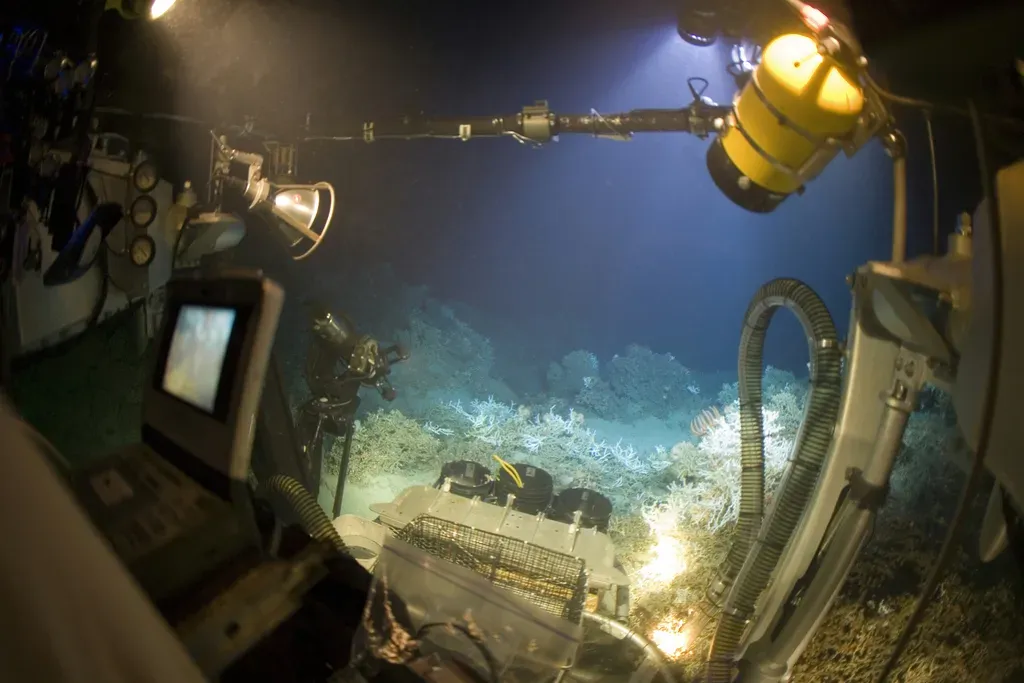
A study by NIWA on the proposal site discovered thriving populations of fish, kelp gardens and sponge gardens, which would be heavily impacted by deep sea mining operations (NIWA, 2022). The project would also impact endangered species like Māui and Hector's dolphins as well as blue whales through mining in their migration routes. These impacts on species would have resounding impacts through the whole ecosystem.
An alternative development for the same area was put forward by the Taranaki Offshore Partnership (a joint venture between the NZ Super Fund and Copenhagen Infrastructure Partners) who wanted to establish an offshore wind farm. This project aimed to provide 1 to 2GW of wind power, which could power up to 1 million homes in Aotearoa, contributing to 11% of the country’s energy demand (NZSF, 2023). The Taranaki Offshore Partnership project would be incompatible with Trans Tasman Resources planned deep sea mining operations. The leftover sedimentation pits from the mining pose significant environmental risks to the offshore wind turbine project. This shows how deep sea mining projects can threaten projects which would have a positive impact due to the extreme impact deep sea mining has on the seafloor and ocean.
As of February 2026, the Fast Track panel declined the Trans Tasman project and the company has withdrawn. This was due to the significant impact that the deep sea mining would have on Māui dolphins, kororā (penguins) and fairy prion (seabirds) in particular. This is a significant win showing the power of community opposition and the compelling evidence of how destructive deep sea mining can be despite the proposed economic benefits.
Global Activity
Yet there is still a significant push for deep sea mining projects globally, particularly from China and the US. The two superpowers are racing to gain access due to the potential high use of rare earth minerals, in AI and defence sectors (Srinivasan, 2025). China has the most deep sea mining exploration licences in the world and was exploring a deal with Kiribati early this year for mining in their waters (Wright, 2025). The Cook Islands has allowed two American companies to explore their waters and collect data on mining potential, while also signing a deal with China for development and research of deep sea mining.
However, there is a shift away from deep sea mining from other countries. In December 2025, Norway banned deep sea mining in the Arctic until 2029 (Gilliver, 2025). The UK, France and Canada and nearly 30 other countries have backed a moratorium to pause or ban deep sea mining. It is not clear the activity is financially attractive. Mining in the deep ocean is technically challenging, expensive and faces regulatory barriers. The Metals Company (TMC) has never made a profit and lost $185m in Q3 2025 - burning through funds provided by investors (NAI 500). Another operator Loke Marine Minerals went bankrupt in April 2025.
Summary
Deep sea mining companies such as TMC The Metals Co, Deep Sea Mining Finance, TechnipFMC and Trans Tasman Resources threaten the health of our ocean ecosystems through their operations. Although projects like Trans Tasman Resources’ bid for mining the South Taranaki Bight can be refused, these companies will continue to try and mine our seabed; Trans Tasman has been trying since 2013. Thus, to stop deep-sea mining, we need to make it very hard for these companies to secure investment.
Deep Sea mining is just one of the topics covered in Mindful Money’s report ‘Let our Oceans Breathe’ which outlines how investment in certain sectors and companies threatens our oceans.
Ready to Align your Investments with your Ocean Values?
Join the ‘Let our Ocean Breathe’ Campaign! Find out about more simple actions you can take to let our ocean breathe.
Your KiwiSaver and managed fund investments can be channeled away from companies causing ocean harm to investments that protect our oceans. Mindful Money's Fund Finder makes it simple and free to discover funds that match your values. Most providers don't charge switching fees, and research consistently shows ethical funds deliver returns that match or exceed traditional options. Your money can protect our oceans while protecting your financial future.
We welcome you to pass this on! The more informed we are, the better decisions we can make towards protecting our beautiful ocean for the future. Use the power of your networks and share this with your friends, family and ocean loving community.
Deep Sea mining is just one of the topics covered in Mindful Money’s report ‘Let our Oceans Breathe’ which outlines how investment in certain sectors and companies threatens our oceans.
Image via Unsplash.